
Owning waterfront property is a dream that a lot of people share. Waking up to the sound of waves and watching sunsets every evening is truly special. However, erosion can threaten both the beauty and value of these properties. Erosion doesn’t just change the landscape—it can lead to real headaches for homeowners, buyers, and investors alike. This guide breaks down how erosion affects waterfront property values, the main causes behind it, and what you can do to protect your investment for the long haul.
How Erosion Impacts Waterfront Property Values
Waterfront erosion can sneak up slowly, then suddenly become a major issue. When erosion starts chewing into a shoreline or bank, property lines may change and land you thought was yours can literally wash away. This isn’t just frustrating—it’s something lenders, appraisers, buyers, and insurers watch closely because it directly hits the property’s value.
When a property loses land, its assessed and market value usually drops. It also becomes harder—sometimes much more expensive—to get insurance. In some situations, local governments may restrict construction or add new requirements for stabilizing the shoreline. These factors make buyers hesitant, often leading to longer times on the market and lower offers. According to NOAA, over 80,000 acres of U.S. coastline erode each year. Properties in those areas may see values drop by 10-20% just because of the risk (source).
Main Causes of Waterfront Erosion
Erosion happens when soil or sediment gets moved away from its original spot. This means your lakefront yard, beach, or riverbank can shrink or move. Here are some of the top reasons for waterfront erosion:
- Wave Action: The push and pull of water, especially from storms or boats, slowly wears away the shoreline.
- Rain and Floods: Heavy rainfall or floods can loosen soil, sending it into the water during runoff.
- Ice Movement: In colder climates, ice pulls soil with it as it shifts during freeze and thaw cycles.
- Poor Drainage: Water that pools or flows across land (because of landscaping or poor grading) can set off sudden erosion events.
- Lack of Vegetation: Roots and natural plants hold soil together. When these get removed and replaced with pavement or hardscaping, the soil becomes vulnerable.
Even top-notch properties can face erosion, so it’s crucial for homeowners and buyers to keep an eye out for what’s changing along the water’s edge over time.
How Erosion Changes Property Appearance and Use
Eroding shorelines can really change the look and use of a waterfront property faster than most people expect. A small slump can quickly become a big issue after a strong storm.
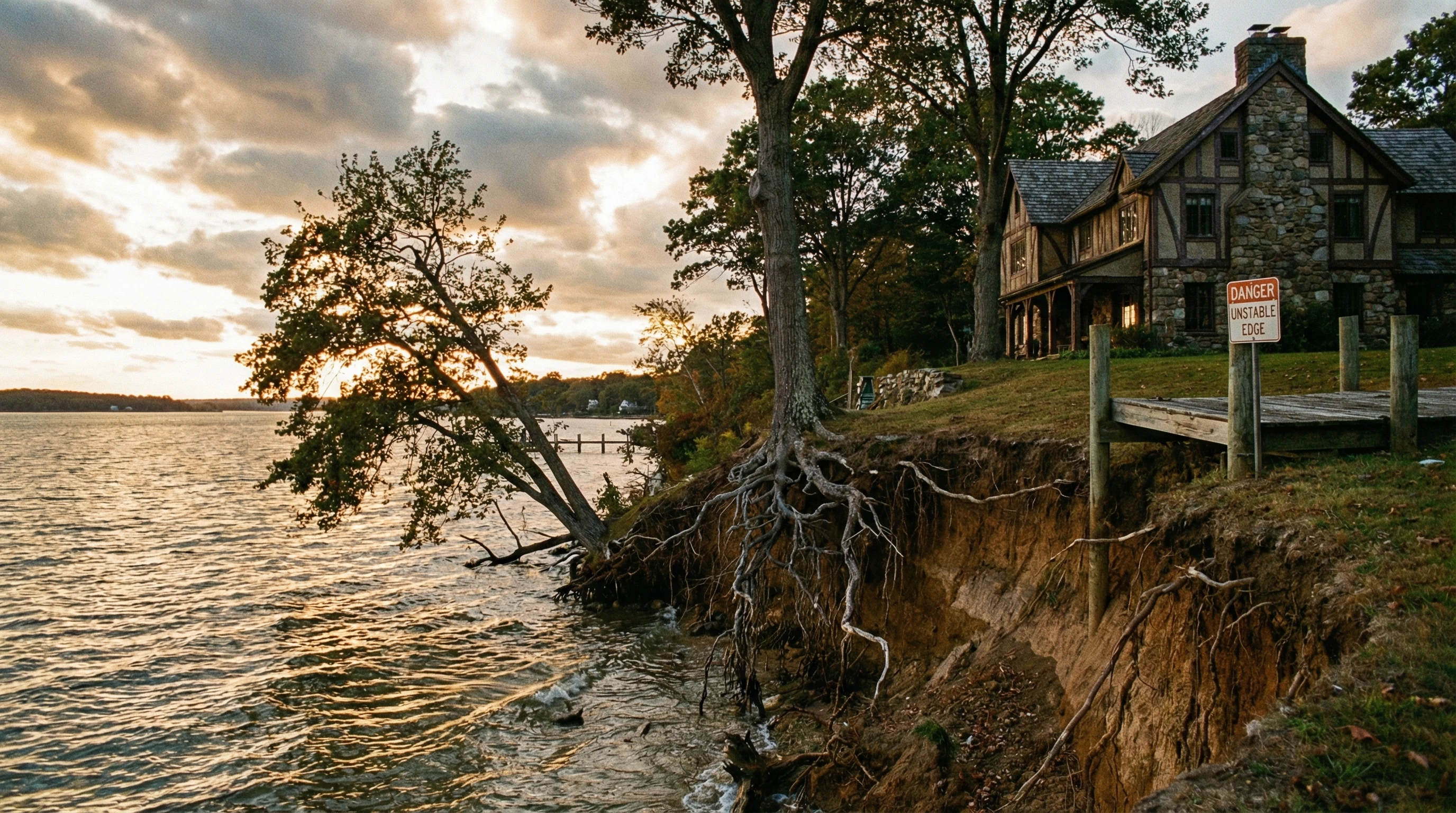
Erosion often results in steeper banks, exposed rocks or roots, and missing landscaping. This can shrink the available beach or yard, making it tough to enjoy features like docks, fire pits, or patios. Areas once perfect for relaxing or entertaining might become unstable or unsafe. Repairs to shorelines, walls, or other features can get expensive, and owners may need to limit access for safety reasons, especially if steep banks develop.
As a result, sellers have a harder time showcasing the lifestyle benefits that usually go along with waterfront homes. Buyers might not get the experience they hoped for, which can dampen the property’s desirability and, ultimately, its value.
Financial and Legal Effects of Erosion
Beyond changes to appearance, erosion comes with real financial impacts:
- Appraisal Value Drops: Appraisers tend to lower valuations based on land loss, repairs needed, and safety worries.
- Loan and Insurance Problems: Lenders may not want to finance high-erosion risk properties, or they may raise down payment requirements. Insurance companies often charge way more, or deny coverage if the risk seems high.
- Building Restrictions: Local governments may ban building new structures or require expensive stabilization work before any changes get approved.
- Disclosure Obligations: Sellers need to tell buyers if they know about shoreline changes or erosion risks—which can scare some buyers off or create legal risk for the seller.
- Repair Expenses: Fixing eroding shorelines, repairing walls, or stabilizing soil can cost thousands to tens of thousands of dollars.
All of this stacks up fast, so erosion risk is one of the first things to consider if you’re looking at buying along the water.
What to Look for Before Buying Waterfront Property
Waterfront real estate is usually priced at a premium, so spotting erosion red flags can help buyers make a smart decision. Here’s what to watch for:
- Recent Shoreline Changes: Walk the property and check for soil loss, exposed roots, or new slopes near the water.
- Erosion Control Structures: Look for bulkheads, riprap, or living shoreline solutions. Ask about their condition and when they were put in.
- Local Erosion History: Chat with neighbors or local officials for insight into how the shoreline has changed after storms or in recent years.
- Regulatory Rules: Research local building and zoning requirements, including permits and rules about repairs or construction setbacks.
- Flood and Storm Trends: Check flood maps and see if climate trends might mean bigger storms or rising water could be a problem in the years ahead.
It’s often smart to bring in a coastal engineer or surveyor before closing on a property. They’ll help spot any high-risk areas and let you know whether repairs or restrictions might become an issue.
How Homeowners Can Manage Erosion
While you can’t always stop erosion, you can take real steps to slow it and protect your investment:
- Plant Native Greenery: Grasses, trees, and shrubs with strong roots help lock soil in place and cut down on runoff.
- Install Riprap or Revetments: Protect your shoreline by lining it with rocks or blocks that absorb wave energy.
- Try Living Shorelines: Combining plants, fiber rolls, and natural materials helps mimic the bank’s natural strength and creates a habitat for wildlife. The NOAA guide on living shoreline solutions is a great resource (reference).
- Keep Up with Maintenance: Deal with small problems right away. Fixing minor erosion early is easier and much cheaper than repairing large sections later.
- Get Expert Advice: Talking to contractors, extension services, or engineers can help you figure out cost-effective ways to address problem spots safely and legally.
Sticking to these steps can help keep your property in good shape and maintain its value, especially when it’s time to sell.
Costs Associated with Controlling Erosion
The expense of protecting your shoreline varies widely. Planting native species might cost only a few hundred dollars up front. On the other hand, larger fixes like engineered walls or full living shoreline projects can run into the tens of thousands. Maintenance costs add up too; after storms or floods, you’ll likely need repairs or checkups. Thankfully, there are often local grants or incentive programs for shoreline stabilization, so looking into those is smart to save money.
Frequently Asked Questions
Here are a few of the most common questions about waterfront erosion:
How quickly does erosion happen?
It depends on storm activity, soil, vegetation, and wave patterns. Some properties lose only inches a year, but others might lose several feet in a single season if conditions are right.
Can I insure my property against erosion?
Most homeowners policies do not cover erosion. Some government or specialty insurers offer erosion or flood coverage, so ask your agent for guidance locally.
Is there any way to completely prevent erosion?
Completely stopping erosion is tough. However, planting native species, adding shoreline structures, and keeping up with maintenance will go a long way toward slowing it down. Living shorelines are especially good for stabilizing banks and keeping things natural if used correctly.
Extra Tips for Protecting Waterfront Value
Here are a few practical steps to better protect and add to your waterfront property value, even when erosion is a concern:
- Inspect your shoreline after storms or high water. Frequent checks help catch problems early.
- Keep records of repairs, improvements, and expert visits. These help during appraisals or when selling.
- Get involved in local shoreline or conservation groups—these efforts can improve stability for whole neighborhoods.
- If you rent out your property, make sure visitors know which parts of the shore are safe and how to avoid fragile spots to prevent extra damage.
Being proactive and informed gives you better odds of having a stress-free and more valuable waterfront property. And whenever you see something new or unsure about conditions along your shore, don’t hesitate to bring in an expert—it can save you big headaches down the road.