
Erosion behind a residential seawall is a common headache for many waterfront homeowners. If water keeps washing away soil from behind your seawall, you end up with sinkholes, unsafe ground, and damaged landscaping. I’ve had to fix and maintain my own seawall, and I know how important it is to use the right prevention strategies early. These methods can keep your property looking good while avoiding expensive repairs.
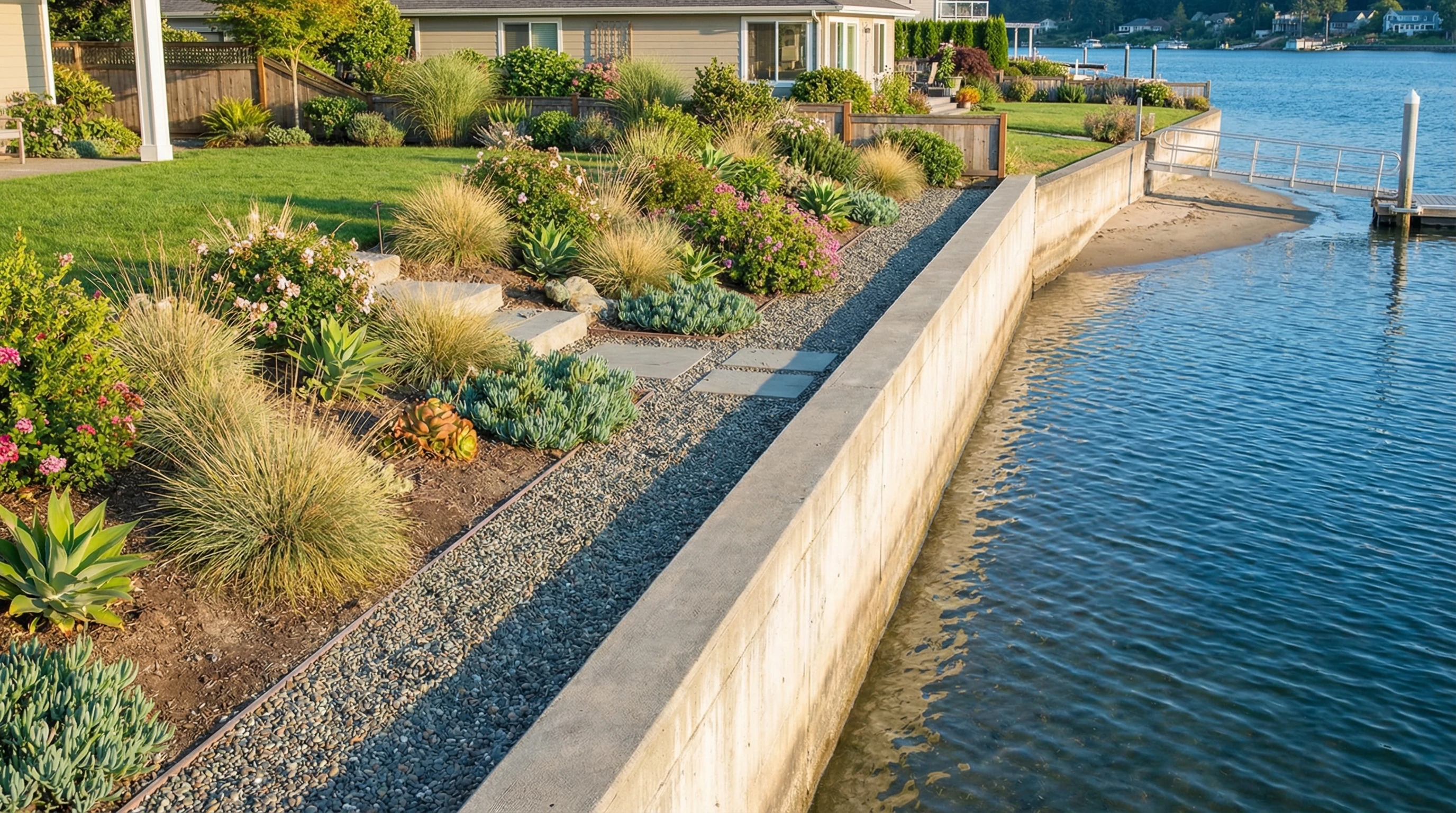
Why Does Erosion Happen Behind a Seawall?
Erosion behind a seawall usually happens when water finds its way over, under, or through the wall. Rainwater runoff, waves, tides, and even irrigation systems can move soil away from the land side of your seawall. When water moves through cracks or seams, it picks up fine soil particles and carries them out toward the water. Over time, this leaves gaps, pockets, and even sinkholes that only get worse with each storm or high tide.
Some seawall designs use drainage holes, called weep holes, to let water escape and prevent pressure from building up behind the wall. If these holes get blocked, water can back up and force its way through small openings, taking soil with it. Tree roots and burrowing animals may also disturb the soil and make it easier for water to flow through.
You may also notice that older seawalls are more vulnerable to erosion because the materials can deteriorate over years of exposure. Cracks in the concrete or weakened wooden planks can allow even more water to seep through and make the ground less stable. Frost and temperature swings might make these cracks worse season by season, adding to the challenges of keeping the soil in place.
Key Ways to Prevent Erosion Behind Your Seawall
I’ve found a few strategies that work well for most homes with residential seawalls. Combining a couple of these methods often provides the best results and helps protect both your property and your investment.
- Backfill Compaction: Packing the soil behind your seawall helps keep it stable. Loose backfill is much easier for water to pick up and wash away. I always choose soil that drains well but compacts tightly, such as sandy loam. After repairs or new installations, I make sure to tamp down the soil in layers to prevent later settling and gaps. If you skip this step, you’re likely to notice uneven patches and more areas where water can get in.
- Proper Drainage: Good drainage manages water before it becomes a problem. Installing gravel layers, perforated pipes, or drainage fabrics behind the wall allows water to move away from your property safely. This way, water won’t get trapped and force itself, along with your soil, through cracks. Regularly cleaning weep holes also keeps water flowing.
- Vegetation: Plants and groundcover can hold soil in place, especially if you use native grasses or deep rooted shrubs. I avoid planting trees close to the seawall because their roots can disrupt the structure, but grasses and smaller plants work well. Their roots help create a living mat that keeps soil from slipping away. In fact, certain creeping plants and sedges can give a natural boost to soil stability while adding a visual perk to your yard.
- Riprap and Revetment: A layer of stones or broken concrete (called riprap) can be placed along the water side or just behind the wall. This method absorbs wave impact and stops water from getting too close to the soil behind the wall. I’ve used riprap to slow down water flow during storms, and it also helps discourage burrowing pests.
- Seawall Cap Sealing: If water is getting over the wall, check if your seawall cap (the top of the wall) has cracks or broken seals. Sealing these areas keeps water from pouring over during king tides or storms. Sometimes, resealing your cap can also prevent saltwater from corroding any metal in older seawalls, helping the whole structure last longer.
Bonus Tip: Routine Monitoring
You should walk along your seawall after every big storm, or at least monthly, to get a feel for any changes. Early detection of small trouble spots can keep a minor crack from turning into a gaping sinkhole down the line.
Step-By-Step Maintenance Routine
Regular upkeep is one of the best ways to spot new erosion threats early. My own routine involves a few simple steps throughout the year:
- Walk the Line: I walk along the seawall after heavy rain, noting any new dips, cracks, pooling water, or muddy spots. If I see small sinkholes, I mark them for repair right away before they get bigger.
- Check Drainage: I test weep holes and surface drains by flushing water through them with a garden hose. If water isn’t flowing out or takes too long to drain, I clear clogs using a stiff wire or light pressure from a garden hose.
- Inspect for Seepage: Wet spots along the base of the wall, or sudden mud on the water side, often mean water is pulling soil through. I look for new cracks and patch them with marinegrade epoxy or hydraulic cement.
- Look for Plant Problems: I keep tree roots away from the seawall and trim back invasive plants. Every couple of years, I refresh groundcover by planting extra native grasses or erosion control plants. You can dig into what grows best in your area by checking with your local extension service for some useful recommendations.
Common Problems and How to Deal With Them
Some problems show up more often than others when dealing with erosion behind seawalls. I’ve solved the following issues several times on my own property and for friends and neighbors.
- Sinkholes: These form quickly when water tunnels out soil underneath. I dig out loose material, pack in compacted fill, and use filter fabric to keep soil in place but let water drain. Patching the source (like a crack or loose joint) after filling is really important. If sinkholes keep popping up in the same place, it’s smart to check in with a pro because there may be a bigger structural issue.
- Weep Hole Failures: If the existing drainage holes clog or get lost behind shifting soil, I use a small auger or pipe snake to clear them. If needed, I drill new holes and install plastic or PVC pipe sections to direct water away from the property. Replacing rusted-out metal pipes can be a quick win that extends the wall’s life.
- Leaking Joints or Cap: When I find cracks or gaps in the wall or cap, I patch them right away with caulk or epoxy rated for underwater use. Waiting too long always means a bigger repair later. If your seawall is older, consider getting a pro inspection at least every five years, since age can reveal hidden weaknesses.
Extra Solutions for Challenging Sites
In some situations, standard repairs and landscaping might not be enough. This is especially true if you have frequent flooding or unusually strong waves. Here are a couple of ways I’ve handled tough situations:
- Geotextile Fabric: Laying a strong filter fabric behind the wall before backfilling helps keep fine soil in place while still letting water drain away. This is handy for sandy sites prone to quick erosion.
- Toe Protection: Lining the bottom edge of the wall with extra rocks or concrete provides more stability at the base. This reduces undermining, where water washes away soil right at the wall’s bottom. Sometimes, you might need to add more material over time if you notice stones getting pushed away.
- French Drains: These underground gravel filled trenches collect and direct water away from the back of the wall. I’ve found that they work well for yards with a big slope or poor drainage. Just keep an eye on these areas in the rainy season and check for any blockages.
Questions Homeowners Often Ask About Seawall Erosion
Over the years, I’ve heard a lot of the same questions from neighbors and family members. Here are some direct answers based on my hands-on experience:
How can I tell if erosion is happening behind my seawall?
Look for new sinkholes, cracks, or muddy spots along the ground where your seawall meets your lawn. You might also see an area that feels spongy or is lower than the surrounding ground. You could notice some fence posts or hardscape features starting to lean if the ground beneath them has been washed away.
What type of soil works best as backfill?
I use well compacting sandy loam or a mix of sand and topsoil. Clay or very loose soil tends to hold too much water or wash away easily. Compacting the soil during installation makes a big difference. If you’re not sure, check out what local landscapers use in new construction near water.
Are there plants that really help with erosion control?
Native grasses, ground ivy, and creeping juniper have worked well in my yard. These plants spread quickly and have roots that hold onto soil, even during heavy rain. I skip large bushes or trees near the seawall because they can cause damage with their roots. Try to mix in some variety so you don’t end up with one plant that takes over the whole area, or create a blend of species for more eye-catching results.
Do I need a professional for every repair?
Sometimes I handle small repairs, like filling a sinkhole or clearing a drain, myself. For issues involving big cracks or shifting walls, I call in a marine contractor with experience in seawall repair to make sure the fix lasts. It’s better to handle small fixes yourself but never hesitate to bring in expert help for more complicated or risky repairs.
Advanced Tips for Long-Term Erosion Control
If you’re planning to upgrade your seawall or refresh your landscaping, a few more tips can make your setup more durable:
- Upgrade Drain Hardware: Swapping out old steel pipes for plastic or PVC lasts longer and won’t rust. This is a small investment that can really make your maintenance routine easier in the long run.
- Install Splash Guards: Adding a small diverter to the top of your seawall keeps rainwater from pouring over the edge and hitting the soil right behind it. I’ve used shaped concrete edging or simple curved plastic strips with good results. Don’t be afraid to check out new products at your local building supply store—sometimes there are new designs that work even better than the basics.
- Regular Inspection Schedule: Keeping a yearly inspection journal, noting dates, photos, and repairs, helps you spot patterns and plan maintenance before bigger issues develop. Take photos in similar lighting and at the same angle each time for easier visual comparison.
- Community Tips: Ask neighbors who have dealt with the same issues. Most people are willing to share advice about contractors or products that have worked (or failed) for them. A little neighborhood knowledge can go a long way.
Following these steps, I’ve managed to stop new erosion behind my seawall and keep my yard looking solid and safe. Whether you’re handling repairs yourself or bringing in an expert, practical prevention and routine checks save time and money in the long run. Keep an eye on your seawall, take action as soon as you notice changes, and your waterfront property will stay safe, attractive, and valuable for years to come.