
If you live near a lake, river, or ocean, a seawall can feel like a real lifesaver. These sturdy barriers help fend off erosion, floods, and the constant pounding of waves. But even solid seawalls can run into a bunch of problems over time. Ignoring those issues just makes things worse, sometimes leading to real headaches like property loss or expensive repairs. I’m going to walk you through the most common seawall problems and share simple, practical ways you can fix or even prevent them.
Understanding Seawalls and Their Purpose
Seawalls are designed to shield land from the power of water. These structures can be made from concrete, steel, vinyl, wood, or rock, and they come in a few shapes. Some are straight and vertical, while others are more curved or piled for extra strength.
Over the years, I’ve seen seawalls do a great job holding back erosion and storms. When they work well, they not only protect the land, but help reduce the impact of flooding. If a seawall fails, the property and landscape behind it usually suffer. That’s why regular inspection and maintenance really matter; catching small problems early almost always saves you from costly repairs down the road.
Common Seawall Problems
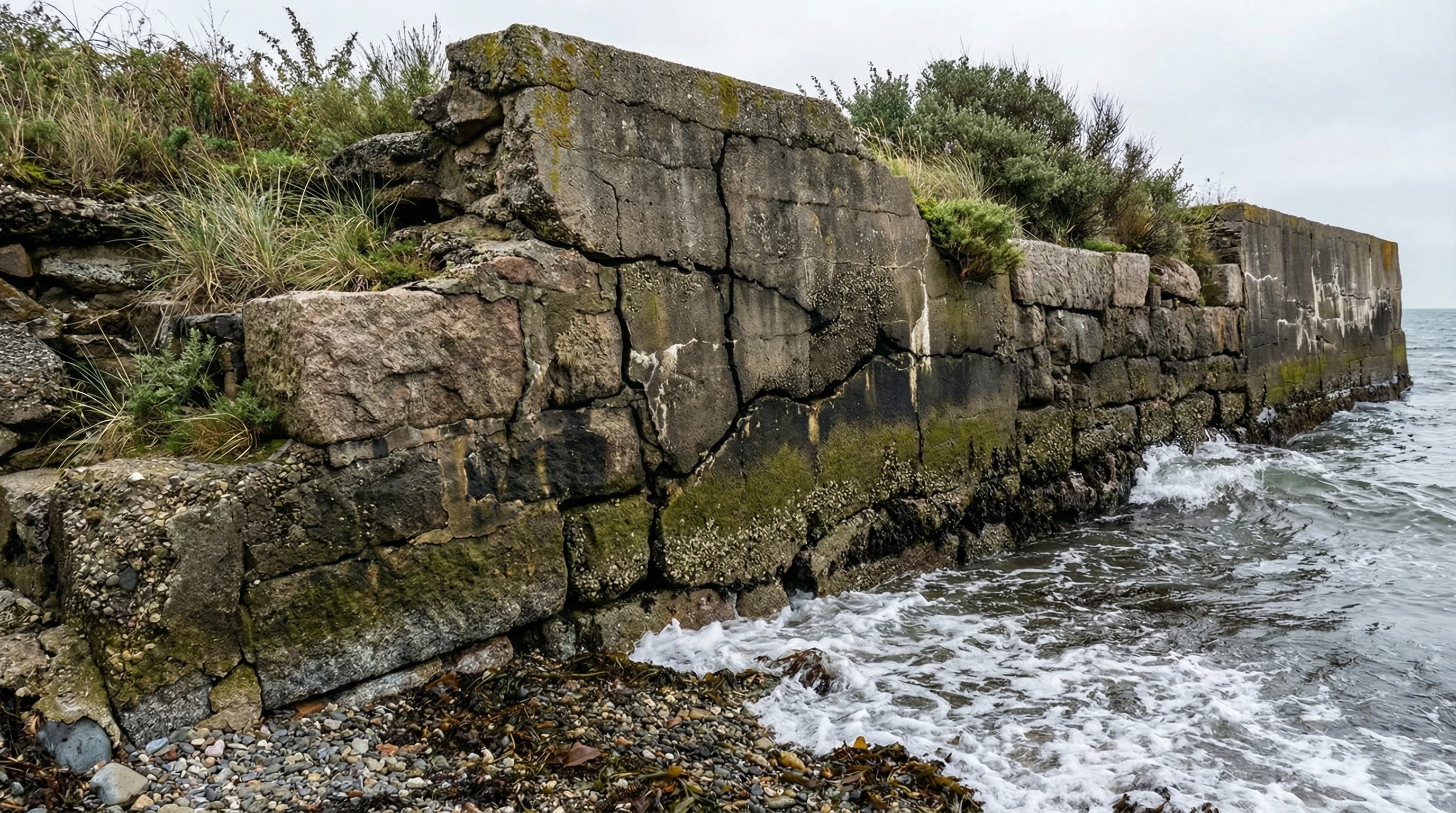
Even the toughest seawalls develop problems over time. Here are some issues that almost always come up, especially with seawalls that have a few decades under their belt.
- Cracking: Seawalls often crack due to water pressure, weather changes, or shifting ground. Small cracks tend to get bigger if you don’t repair them early.
- Bulkhead Leaning or Bowing: If you see the wall tilting or bowing out, this usually points to erosion behind the wall or failure in the support structure.
- Soil Erosion Behind the Wall: This usually shows up as sinks, holes, or depressions in the ground just behind the seawall. Sometimes, you’ll even spot soil spilling out into the water through gaps.
- Water Seepage and Drainage Issues: Seawalls are supposed to let water flow out from behind them, just not in big jets. Bad drainage, standing puddles, or leaks mean the wall isn’t handling water pressure the way it should.
- Corrosion and Rot: Metal seawalls rust, and wood rots. Both conditions get worse in salty air and water.
- Displaced or Missing Cap: The top part (cap) of a seawall keeps water, debris, and plants from getting in between the wall components. If this cap is cracked, loose, or missing, problems start showing up fast.
- Vegetation Growth: Roots growing through the wall or behind it can widen cracks and create new paths for water. I’ve seen weeds split concrete if they aren’t removed quickly.
How to Spot Seawall Problems Early
You don’t have to be a marine engineer to catch seawall issues. With a careful look, you can spot early warning signs. Here’s what I usually check:
- Check for new cracks, bulges, or leaning sections.
- Walk the land behind the seawall for soggy ground or depressions.
- Look for water trickling or gushing out where it shouldn’t, especially after rain or a storm.
- See if the cap is in place and well sealed.
- Check for rusty stains, flaking metal, or wood rot.
- Watch for new plants or exposed roots.
A quick walk once a month, or after big storms, is usually enough to spot most problems before they get out of hand. The earlier you track down these warning signs, the more likely you’ll avoid pricey repairs later.
Fixing Common Seawall Issues
Once you’ve spotted a problem, jumping on repairs quickly makes a real difference. Here are practical fixes for each of the most common issues:
Repairing Cracks
Most seawall cracks are pretty easy to patch with the right sealant or epoxy. For smaller cracks, marine grade epoxy or polyurethane injection works well. For larger cracks, especially if you see water actively leaking through, you may want a professional to pressure inject polyurethane foam, which expands and seals the entire gap. I always make sure to clean out debris before patching so nothing gets trapped inside. Once sealed, check again after heavy rainfall to see if any cracking reappears. This helps you figure out if there’s a deeper problem underground.
Stabilizing a Leaning or Bowed Seawall
If you see a section leaning or bulging out, that’s a warning sign not to ignore. For minor leaning, adding tiebacks, anchors, or helical piles can help pull the wall back upright and stabilize the base. More serious problems could mean the entire wall needs to be rebuilt or have new supports driven deep into the ground. If you’re unsure, getting a seawall contractor to take a look is super important, since fixing a heavy lean isn’t really a DIY job.
Fixing Soil Erosion Behind the Wall
Soil eroding out from behind seawalls is super common. Most times, it happens because seawall joints open up or the drainage system fails. I recommend:
- Filling in washed-out soil using sand or gravel.
- Installing filter fabric between the soil and the wall to keep sediment from washing out.
- Replacing or upgrading weep holes and drainage pipes to make sure water drains without carrying out soil.
- Double-checking that backfill is packed tightly so you don’t have voids forming behind the wall. A loosely packed base gives water more places to hide and cause trouble.
Improving Drainage and Stopping Seepage
Seawalls are designed with weep holes so water can escape from behind them. Regularly check these holes to make sure they aren’t blocked by debris or barnacles. If water pools behind the wall, adding more drainage outlets or pipe sleeves fixes the issue. For older seawalls, I sometimes use small submersible pumps as a backup if natural drainage just can’t keep up after big storms. Make sure any pump drains back out into the water and not into your yard.
Handling Corrosion or Rot
If you have metal or wood seawalls, keeping an eye out for rust or rot is really important. Small spots of rust are best handled with a wire brush and rust-inhibiting primer or paint. For wood, swap out or treat any soft, spongy boards right away. For bigger steel or wood damage, replacing the affected sections is usually best. Vinyl and concrete tend to hold up better here, but still need occasional cleaning and sealing to last longer. Also, regular inspection under the waterline can help spot trouble areas before they spread.
Seawall Cap Repair
If your seawall cap is loose, cracked, or missing, resealing or replacing it helps prevent debris and water from sneaking in. I use marine grade sealant for small gaps or cracks. If the cap is seriously damaged or missing, a new cap or a concrete pour is needed. This step might seem minor, but it really makes a big difference in the wall’s overall strength and lifespan.
Removing Vegetation and Roots
Plants and roots love to find the tiniest cracks, making them worse over time. Pull up visible weeds, and for persistent root growth, dig out the roots and fill any holes left behind. For concrete walls, sealing the cracks after root removal helps stop new growth. Avoid using heavy weed killers near the water; manual removal is safest for the local ecology. Staying ahead of vegetation is one of the easiest ways to keep your seawall in solid shape.
How to Prevent Future Seawall Trouble
Keeping a seawall in good condition mostly comes down to routine care. Here’s what my regular maintenance usually looks like:
- Inspect after every major storm or significant tide change.
- Clean debris and plant growth off the top and sides.
- Check and clear weep holes and drains regularly.
- Patch tiny cracks before they become major gaps.
- Reseal caps and joints every few years for concrete and vinyl walls.
- Consider having a qualified professional check the buried supports and footings every few years, especially for older seawalls. This isn’t always necessary, but it can uncover issues you’d miss from above ground.
Staying ahead of these issues not only saves money but also protects the property and peace of mind. If you’re not comfortable tackling repairs yourself, it’s smart to call in a local seawall specialist for a yearly checkup or major repairs. Teaming up with neighbors who also own seawalls can be a smart way to schedule group inspections and possibly score a lower rate from professionals. This helps keep the whole shoreline sturdy and safe for everyone.
Real-World Examples and Experiences
I’ve seen neighbors lose patches of their backyard overnight simply because a crack in the seawall was left alone too long. On the other hand, those who keep up with minor repairs rarely deal with big problems. In my case, cleaning out the weep holes with a coat hanger after each storm has saved me loads of hassle with drainage and erosion. Simple, consistent checks always pay off. One friend of mine thought his seawall was fine until he saw a muddy puddle forming behind it. By acting quickly and calling in a pro, he fixed a hidden drainage issue before it led to a total collapse. Hearing stories like these always reminds me how important it is to keep an eye out for problems and not let little repairs slide.
Frequently Asked Questions
People often ask about seawall upkeep. Here are a few popular questions I hear and some practical answers from what I’ve learned over the years.
What’s the fastest way to handle new cracks in a concrete seawall?
Using a marine grade sealant or epoxy fills and seals most small cracks in under an hour. For longer or deeper cracks, getting a pro to pressure-inject expanding foam works well and offers better long-term protection.
Is it normal for a seawall to lean slightly?
Small shifts can happen over time, especially after a big storm, but a leaning wall shouldn’t be ignored. Stabilizing with anchors or tiebacks is a smart first step, but if it keeps moving, professional help is recommended.
How often should I have my seawall inspected?
At least once a year for a pro inspection works well, but checking it yourself every few months, especially after bad weather, is worth doing for peace of mind.
Wrapping It Up
Spotting problems early and tackling them with simple fixes does wonders in prolonging a seawall’s life. Regular checks, basic maintenance, and calling in pros for tougher jobs helps protect your land and wallet. Keeping an eye on things might feel small, but it really does make a huge difference when those tough storms roll in. Getting on top of problems fast helps you avoid more expensive repairs later and keeps your shoreline safe and looking great for years to come.