Marine construction projects can quickly become expensive if the right strategies are not in place. Over the years, I’ve seen how selecting cost-effective techniques and materials helps stretch a project budget without giving up durability or quality. If you’re looking to build marine structures like docks, seawalls, piers, or jetties, there are several ways I save money while still getting reliable results. I’m going to break down proven techniques and materials that can control costs in marine construction.
Why Affordable Marine Construction Matters
Staying within budget is really important in any construction project, but for marine jobs, costs can skyrocket if plans or choices go off track. Materials are exposed to tough environments like constant moisture, waves, and possible saltwater corrosion. Choosing affordable solutions that can still hold up to these challenges helps avoid repairs or early replacement. In my experience, keeping things efficient from the start reduces the risk of surprise costs down the line.
Marine construction has changed a lot. Now, more project owners and contractors ask about low-cost options, both for new builds and repairs. There’s a bigger selection of budgetfriendly materials, methods, and equipment, making it easier to manage tight budgets even in challenging environments like lakes, rivers, and coastlines.
Popular Cost-Saving Techniques in Marine Construction
I’ve found that being smart about construction techniques can help lower costs during every stage of a marine build. Some of the most effective approaches include:
- Prefabrication: Constructing docks or seawall sections offsite allows for greater quality control and can help speed up installation. I’ve seen this reduce labor and equipment rental costs because the parts can be quickly assembled onsite.
- Modular Design: Building in modules means the project can be adapted to the shoreline or to changing budgets. For example, clients can choose to build a basic dock now, then add more sections when they’re ready.
- Lightweight Equipment: Using smaller, lighter cranes or floating platforms (barges) brings down transportation and fuel costs, which has made a big difference on jobs I’ve managed, especially in remote spots.
- Selective Replacement: It’s often more affordable to repair or reinforce parts of existing marine structures than to rebuild them from scratch. Targeted repairs with modern patching materials help make older docks, bulkheads, or pilings last longer.
In addition, modern surveying tools and digital project planning have changed the industry. By using drone surveys and software, project managers can create more precise budgets and spot possible challenges before construction even starts. Early identification of these issues saves money by avoiding costly delays and wasted materials.
Low-Cost Marine Construction Materials That Last
Material choice will always be one of the largest expenses in marine construction. I always recommend looking for options that balance upfront cost with long-term durability and maintenance needs. Here are the main categories I rely on for affordable builds:
- Pressure Treated Wood: This is often the goto for docks and small piers because it’s relatively cheap, easy to install, and can stand up to rot and marine borers much longer than regular lumber. I usually recommend wood treated for marine use to help prevent early decay, even though it’s a bit more expensive than basic options.
- Composite Decking: While composite boards often cost more up front than wood, they last a lot longer and need less upkeep. This can save money on cleaning, sealing, and replacing cracked planks, especially in heavy-use public areas.
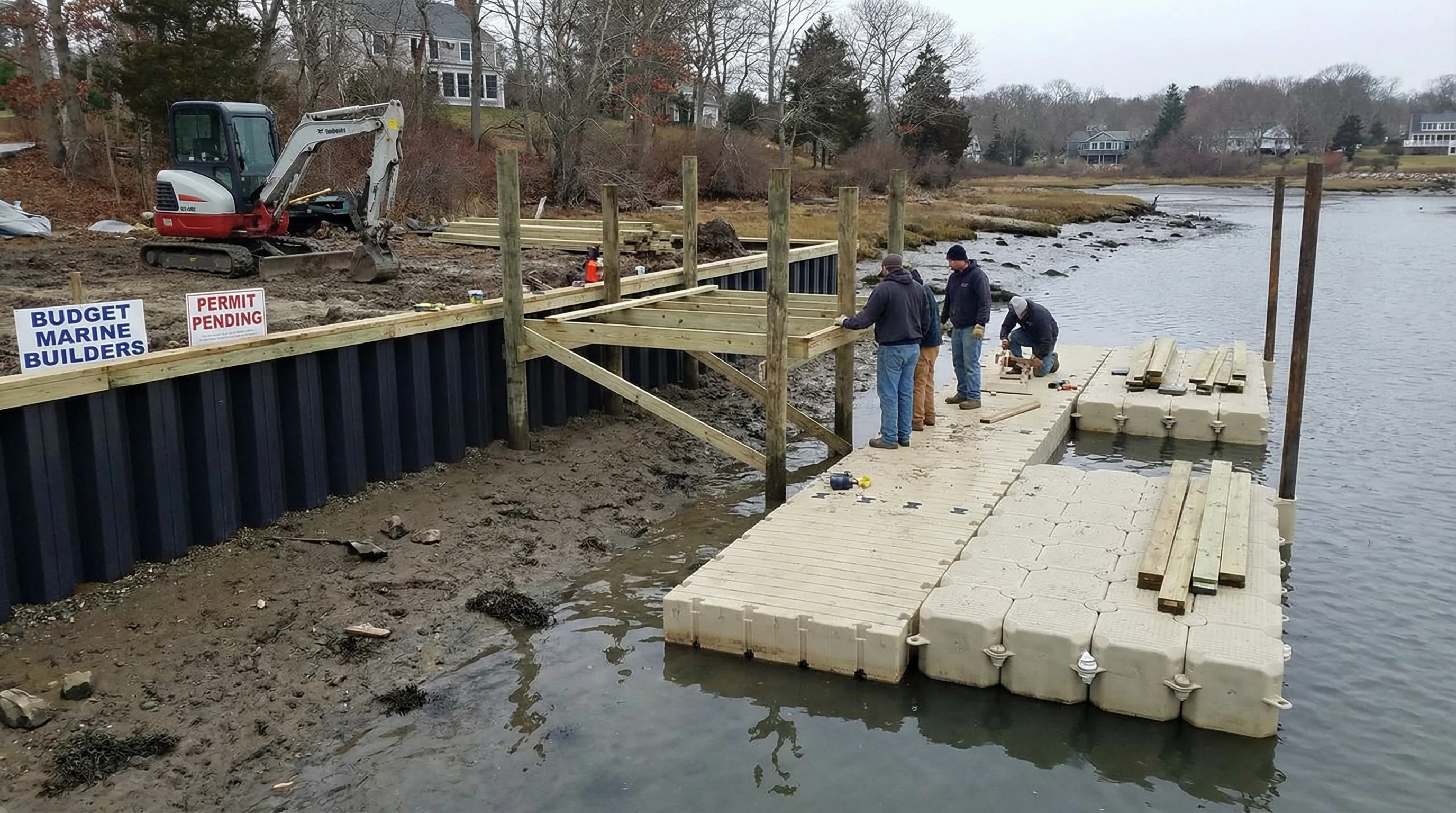
- Vinyl and PVC Sheet Piling: For seawalls and bulkheads, vinyl or PVC piling can be a major money saver. The installation is usually faster than steel or concrete, and these materials resist rust and corrosion. I’ve seen vinyl sheeting last for decades with almost no maintenance.
- Geotextile Fabrics: These synthetic cloths get used in underwater foundations and shoreline reinforcement. They’re not expensive and they help stabilize soil, reduce erosion, and keep rock and sand in place. Adding a geotextile layer has really paid off for me in shoreline repairs.
- Locally Sourced Stone and Recycled Materials: Using stone or aggregates available near the project site can keep transportation costs low. Whenever possible, I look for recycled concrete or other reclaimed materials, especially for breakwaters or riprap.
Fiberglass is another material I occasionally use for custom marine features, especially in areas where weight and corrosion resistance are critical. While the upfront cost may be higher than some alternatives, fiberglass panels and pilings offer long life and very little maintenance. For clients who plan to use their dock for decades, these materials can be worth the extra investment over time.
How to Plan a Budget-Friendly Marine Project
Careful planning makes a real difference in keeping marine construction projects affordable. Here’s how I start every project to keep costs down:
- Site Assessment: I always walk the site and check underwater conditions, soil type, access roads, and weather risks. Knowing these things ahead of time means fewer change orders and delays.
- Design for Local Conditions: I design with the local environment in mind. Adapting the shape, size, or height of a structure to local wave action and water levels can reduce the need for heavy (and expensive) materials.
- Phased Construction: Building in phases helps spread out costs. For instance, I might complete the main dock in year one and add a boat lift or extra pier arm the next year.
- Choose Simple Anchoring Systems: Lighter duty helix anchors or driven posts can sometimes do the job at a fraction of the cost of deep concrete piles, especially in soil that’s easy to work with.
- Work with Experienced Crews: Skilled workers get things done faster and with fewer mistakes. Experience can mean fewer punch list items and less need for reworks or corrections later.
Getting the design right and making practical choices early really helps keep expenses on track. In addition, staying in close communication with suppliers and project partners will help avoid backorders or unexpected price jumps, which are becoming more common in the construction industry. I always get multiple quotes for materials or services so I can be sure I’m getting the best deal without cutting corners.
Challenges and Solutions for Affordable Marine Projects
Even the best budget plans run into unexpected problems. There are a few common issues I’ve come across and how I work to solve them:
- Permitting Delays: Marine projects often require special environmental or zoning permits. To get ahead of red tape, I start the paperwork early and check with the local authorities about any waterway restrictions.
- Material Delivery: Getting materials to remote or water access sites can get expensive if not planned in advance. I sometimes schedule all deliveries for a single day, which saves money by grouping equipment and labor together.
- Weather Interruptions: Storms and high tides can delay work. Building schedules with allowance for weather downtime helps avoid overtime charges or rushed jobs that can cost more in the end.
- Long-Term Maintenance: Affordable initial construction is only valuable if the structure lasts. I prepare a maintenance plan with low-cost, simple fixes, such as occasional inspections and quick repairs, which protects the investment and stops small issues from growing into expensive headaches.
In many cases, unexpected soil or underwater obstructions can be a setback. I recommend investing in a detailed initial survey, so surprises like sunken debris or big rocks don’t add sudden costs. Being flexible about minor changes in design or materials also keeps a project moving, even if conditions shift during construction.
Examples of Smart, Cost-Effective Marine Construction
From my own jobs and industry case studies, I’ve seen these methods pay off in different ways:
- For a small marina, we built floating docks from prefabricated frames and recycled plastic decking. Total labor costs were about 30% lower than a traditional timber build, and maintenance over five years was mostly a quick wash and check for loose connectors.
- Reinforcing a residential seawall, we used vinyl sheeting with lightweight concrete cap blocks. The homeowner saved enough compared to a full concrete wall to add a boat lift the following year.
- I helped repair a lakeside pier with selective pile replacement. Using pressuretreated pilings only where the old ones had failed meant the structure was ready in days instead of weeks, and disposal fees stayed low because we kept much of the original wood.
In another project, my team restored a public fishing pier by switching to composite decking installed over salvaged steel supports. The city saved thousands on demolition and disposal fees, and the composite surfacing meant lower maintenance costs over the next decade. These examples show how making the most of local and recycled materials, clever design, and phased project plans can result in real savings and longer-lasting structures.
Questions People Ask About Affordable Marine Construction
Here are some of the most frequent questions I hear when talking with project owners about low-cost marine building options:
How long does a basic pressuretreated wood dock usually last?
With the right maintenance, I typically see these docks last 10–15 years, sometimes longer. Regular inspections and quick repairs go a long way toward extending their life.
Is vinyl sheet piling really as strong as steel or concrete?
For many private docks and residential seawalls, vinyl holds up extremely well and costs less up front. If you expect heavy wave action or big boats, I sometimes recommend additional reinforcement or a hybrid approach.
Are floating docks more affordable than fixed docks?
Floating docks are usually simpler and cheaper to install, especially for shallow or fluctuating water levels. They need anchoring and more checks for wear, but overall I find them a good budget choice for smaller projects.
What’s the best way to spot hidden costs before starting a marine construction project?
The most reliable method is to carry out a thorough site survey and detailed project assessment. Checking for issues like hard-to-reach locations, challenging soil, or access restrictions will help you estimate costs more accurately and avoid being surprised by extra expenses.
Wrapping Up Your Next Marine Project Affordably
Affordable marine construction is easier today than ever before. Picking the right materials and practical building methods makes it possible to create long-lasting shoreline structures without straining your budget. By planning carefully, working with the right team, and choosing proven cost-saving options, I’ve found projects finish faster, cost less, and stand up well over time. It’s always worth exploring every option to see what works best for your specific location and needs.