
Living on the water can be pretty amazing. Still, it comes with a big responsibility—keeping your property safe from erosion. Waterfront erosion can sneak up on you, eating away at your land, damaging landscaping, and even lowering your property value over time. Waterproofing those edges isn’t just about looks; taking the right steps to manage erosion helps keep your investment safe and your shoreline looking good for years to come. Here, I’ll walk you through practical erosion control techniques you can use to help keep your waterfront property in its best shape.
Why Erosion Control Matters for Waterfront Property Owners
Waterfront homes face some unique challenges. Wind, waves, heavy rain, and even rising water levels can all eat away at your shoreline. This isn’t just a cosmetic issue; when waterfront property erodes, you can lose valuable land, risk your home’s foundation, and face expensive repairs if you wait too long. Erosion also affects water quality by washing soil and debris into lakes, rivers, or oceans. That’s not great for the local ecosystem either, as silt and nutrients can disrupt habitats and contribute to algae blooms.
By tackling erosion early, you’ll protect your investment, keep maintenance costs down, and avoid complicated restoration work later. Plus, a well-kept shoreline usually means a higher resale value if you ever decide to move. It’s a smart move for any waterfront homeowner, and it helps preserve the natural beauty and utility of your property for future generations.
Common Causes of Shoreline Erosion
Every property is a little different, but some common things tend to speed up erosion along the water:
- Wave Action: Constant movement from waves, boats, or currents slowly wears away the shore.
- Runoff: Water from rain or melting snow runs down slopes, taking soil with it and making erosion worse.
- Lack of Vegetation: Bare spots on your bank make it easier for soil to wash away.
- Ineffective Drainage: Gutters or pipes that dump lots of water onto one section of the shoreline create soft spots.
- Human Activity: Foot traffic, docks, or construction work can loosen soil and disturb stability.
Pinpointing the top contributors on your property helps you pick the best erosion control method for your needs. In some cases, a combination of these causes is at play, so it pays to walk the shoreline regularly and look for changes—small gullies, newly exposed roots, or altered slopes.
Natural Erosion Control Techniques
Natural solutions blend into the environment and often cost less than big construction projects. Here are a few natural options I really like for protecting shorelines:
- Planting Native Vegetation: Trees, shrubs, and grasses with deep roots strengthen soils while slowing runoff. Look for plants that are already local to your area so they’re tough enough to handle your climate and soil conditions.
- Buffer Zones: Leaving a strip of natural vegetation between your yard and the water works like a filter, catching sediment before it ends up in the lake or river.
- Live Staking: Inserting cuttings from willows or similar plants into the bank helps anchor loose soil and jumpstarts new growth fast. Willows are especially popular because they root quickly and grow hardy branches that support the soil in just a season or two.
- Coir Logs and Mats: These biodegradable fiber rolls or mats are secured along the bank, protecting fresh plantings until they’re established. They naturally break down over time and are especially helpful on banks that see frequent minor waves or runoff. You can combine these with seeding mixes to speed up plant cover.
Going natural can take a bit longer to really show results. Still, the low impact and minimal maintenance make these techniques totally worth checking out if you want to keep things green and easy. Not only do they make your shoreline look more eye-catching, but they also create healthier habitats for fish, birds, and other wildlife.
Hardscape Erosion Control Methods
Some spots need a little more muscle to handle wave action or heavy runoff. Here are popular hardscape (engineered) solutions people use along waterfronts:
- Riprap: Large rocks or stone chunks placed along the shore absorb the energy of waves and hold the soil underneath in place. Riprap is a classic go-to for lakefronts and riverbanks.
- Seawalls: Built from concrete, vinyl, or steel, seawalls act as a solid barrier between water and land. They’re durable and super useful for high-traffic or high-risk areas but can be pricey and sometimes need permits.
- Gabion Baskets: Wire cages filled with rocks are stacked along the shoreline. They slow water movement, helping soil settle and keeping the edge sturdy even during storms. Gabion baskets work especially well on slopes or where you want some flexibility, as they allow for a bit of movement without losing effectiveness.
- Terracing and Regrading: Slope the land in a way that slows water down and keeps it from racing toward the waterline. Steps or gentle terraces also help with drainage. In addition, terracing can give your property a next-level cool look and add usable space for planting or recreation.
These engineered fixes are strong and can offer pretty quick results, especially if you’re already dealing with a lot of washout. However, they usually need some professional help to design and install for maximum effectiveness, so be sure to ask local contractors for references and examples of completed projects in your area.
Combining Natural and Engineered Methods
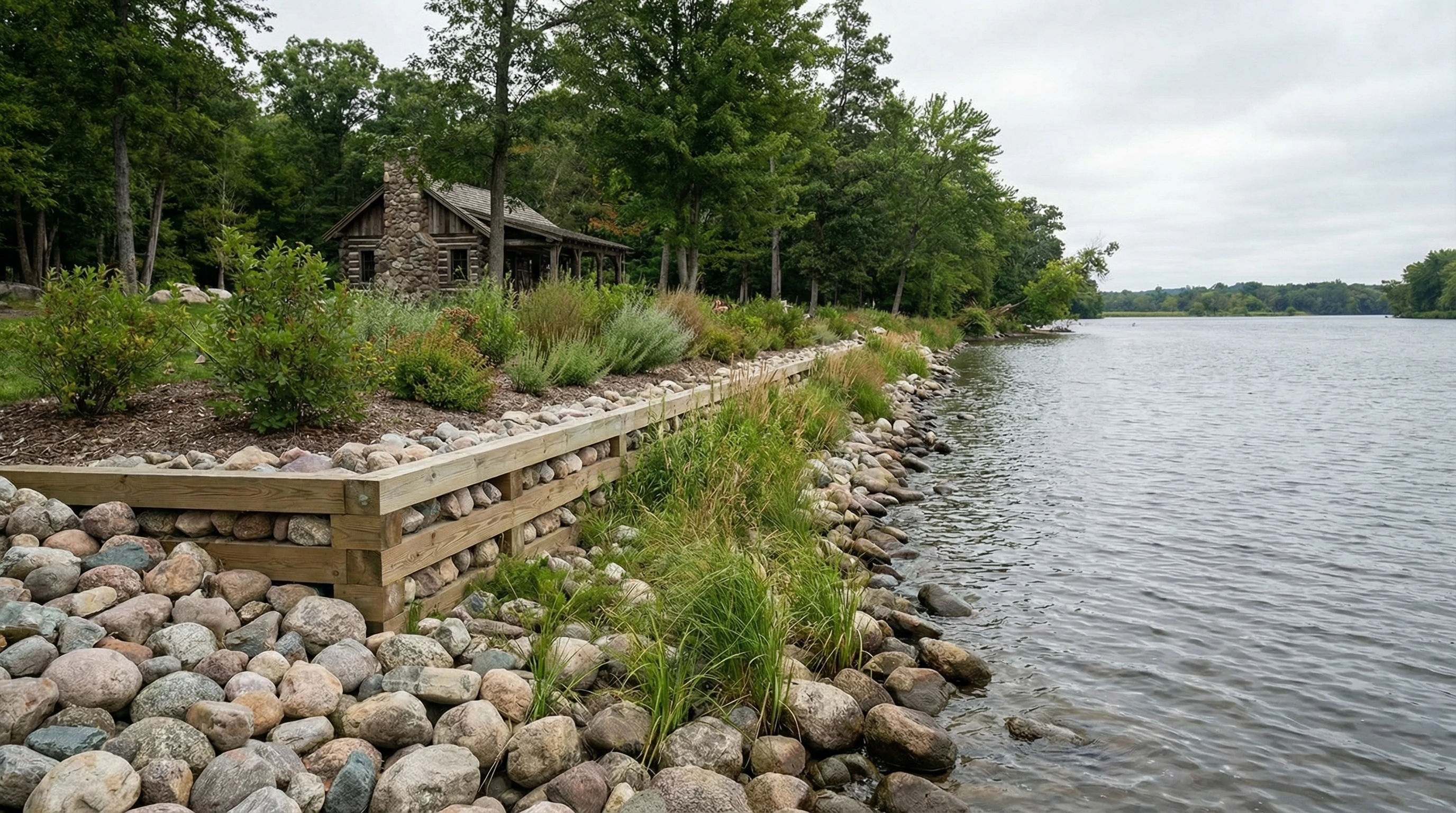
Lots of property owners end up using a mix of both approaches to get the best of both worlds—stability and a natural look. You might see riprap at the water’s edge to absorb wave energy, with native plants above and behind it to keep the rest of the bank together. Pairing coir mats (for short-term protection) with long-term plantings is another common combo.
Choosing different solutions for separate areas, based on how much exposure or foot traffic they get, helps create a shoreline that’s sturdy, low-maintenance, and nice to look at. Customizing your plan also makes it easier to budget and maintain since you can focus resources where they’re needed most.
Things to Think About Before Getting Started
Before you go tearing up your shore or ordering a truckload of rocks, it’s really important to figure out what your property needs. Here are a few things I always suggest thinking through first:
- Assess how waves, boat wakes, and runoff typically hit your property and where the most erosion is happening.
- Check if you need permits. Lots of shoreline work has strict rules, so check with your local municipality or conservation authority before you start.
- Balance your budget. Some fixes are pretty affordable, while others (like seawalls) can get expensive fast.
- Factor in long-term maintenance. Natural solutions might take more work at first but less in the long run, while hardscape options may require repairs later.
- Think about how the changes will affect wildlife habitat, water quality, and the look of your property. Sometimes, even the smallest alteration can have ripple effects, especially on how your neighbors experience the shoreline.
Careful research helps buyers make informed decisions; they’re usually happier with the results and spend less time dealing with surprises. Consulting with local experts or nearby property owners who have faced similar challenges can also save you headaches.
Vegetation Choices for Waterfronts
Native plants are your best bet for stabilizing your shoreline because they’re adapted to local conditions and don’t need much watering or fertilizing. Some great choices include:
- Willow, red osier dogwood, or buttonbush for their strong root systems
- Switchgrass, blue flag iris, or sedges for low-growing cover
- Wildflowers and groundcovers for erosion control and pollinator appeal
Most local conservation authorities offer lists or even starter kits. These are worth checking out if you’re not sure where to begin. Someone at your county extension office can help you select varieties that handle your soil type, sunlight levels, and seasonal water changes. Remember: native species not only take root quicker but also draw in beneficial wildlife, creating a lively and eye-catching shoreline.
Signs Your Shoreline Needs Attention
Catching problems early can really keep costs down. Some common warning signs are:
- Exposed roots where plants or trees used to cover the ground
- Steep or undercut banks instead of a gentle slope toward the water
- Muddy water near the shoreline, especially after rain
- Loss of vegetation along the water’s edge
- Puddling or unexpected ‘islands’ after storms
Spotting even small changes helps prevent bigger damage later. Get in the habit of walking your property after heavy rains or seasonal water changes—you might stumble upon a developing issue before it becomes a big headache.
Expert Tips for Maintaining Shoreline Erosion Control
Staying on top of things is the best way to get long-lasting results. Here’s what I’ve learned works best:
- Inspect shoreline fixes every spring and fall for signs of shifting stones, exposed soil, or dead plants. Documenting with photos each season helps track down slow changes.
- Replant bare spots quickly to stop them from spreading. Consider native sod or plugs for faster coverage.
- Redirect gutters and drains so they don’t dump tons of water in one place. If runoff is a regular problem, a rain garden set back from the bank can give a boost to both drainage and curb appeal.
- Avoid using fertilizers and lawn chemicals right near the water; they can break down soil structure and harm local aquatic life.
- Keep foot traffic away from fragile banks, at least until plants are well established. Adding stepping stones or an obvious path can smooth the way and keep visitors from trampling newly planted areas.
Consistent care goes a long way. If you notice a small problem, fixing it right away saves time and money later. Also, check in with neighbors—erosion control works best when neighboring properties work together, especially along shared shorelines or community paths.
Frequently Asked Questions
Here are a few questions I hear all the time from waterfront owners and folks thinking of buying lakeside or riverfront property.
Question: What’s the quickest way to stop erosion if I see sudden damage?
Answer: Putting in riprap or coir logs right away helps control washout. But, long-term, getting vegetation established is really important for full recovery. You might also want to seek advice from a local expert to spot hidden risks.
Question: Do I really need a permit for shoreline work?
Answer: In most locations, yes—especially for seawalls, riprap, or any project that changes the shoreline. Always check with your local municipal office before starting. Permits help protect not just your property but also the shared environment.
Question: How can I make erosion control look good and fit with my landscaping?
Answer: Mixing native plants and stones keeps the shoreline natural and blends with your surroundings. You can add pops of color with wildflowers or choose stones that match your patio for a smooth look. Try checking out local demonstration gardens or shoreline restoration examples for inspiration.
Protecting your waterfront property from erosion isn’t just about saving money or looking good. It’s a pretty smart way to make sure your lakeside living stays safe, beautiful, and valuable no matter what the weather or water brings your way. With the right mix of options, vigilance, and timely maintenance, you can keep your shoreline thriving for years to come.