
Constructing a floating dock that can handle sun, water, and steady foot traffic is a rewarding project, whether you’re building for personal use at a lake cabin or equipping a public marina. The materials you choose will have a direct effect on how well your dock holds up to the elements and how much ongoing maintenance you’ll face. I’ll break down the top materials you’ll need for building a durable floating dock so you can plan your project with more confidence.
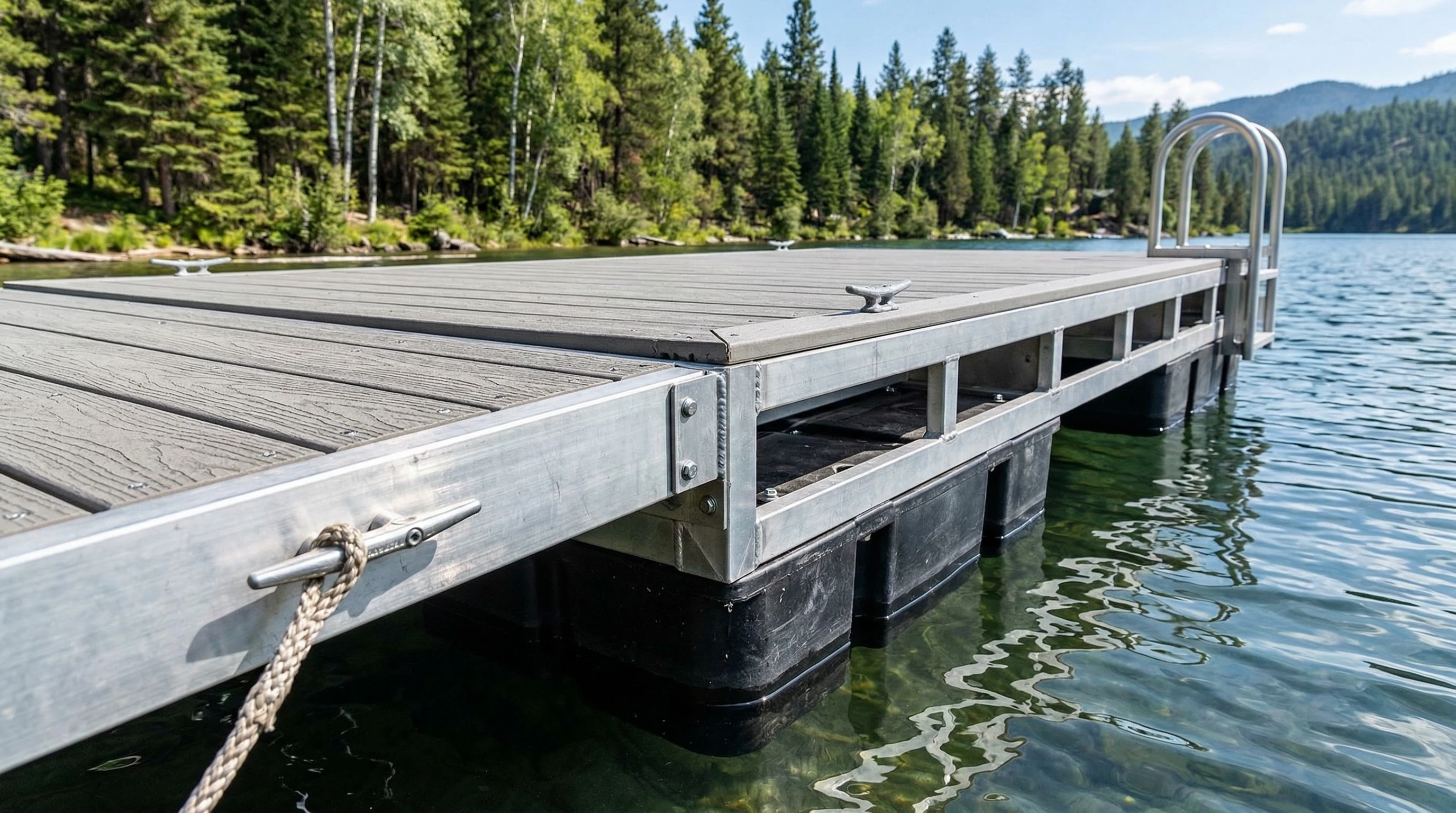
Why Your Floating Dock Material Choices Matter
The main goal with floating docks is to create something that floats stably, stays strong under foot, and resists long-term sun, water, and weather damage. Over time, the right combination of flotation barrels, framework, and decking material can cut back on repairs, extend the life of your dock, and keep your investment looking good. I’ve found that thinking through your dock’s use, water conditions, and climate makes a big difference when comparing material options. Coastal docks faced with salt water and wake from boats need stronger and more resistant materials compared to a dock in a calm freshwater lake.
Today, modern floating docks are used everywhere from waterfront homes to commercial marinas. Whether you need something for recreational swimming, launching kayaks, or tying up boats, the basics stay the same: sturdy flotation, a tough structural frame, a resilient deck, and good hardware to hold it all together.
The Core Components: What Makes Up a Durable Floating Dock
I break down a reliable floating dock into a few main parts: flotation, framing, decking, and hardware. Each has materials that work better depending on your setting and needs.
- Flotation: The floats keep the dock above water, absorbing changes in load and water level.
- Framing: The framework ties the dock together and takes the stress from activity and weather.
- Decking: Top panels provide the walking surface and shape the look and safety of your dock.
- Hardware & Connectors: Fasteners, brackets, and couplers keep sections anchored and secure.
Choosing Flotation: The Foundation of Dock Stability
Choosing the right type of flotation is really important because it determines how steady your dock feels underfoot and how much weight it can safely support. Without sufficient buoyancy, your dock can sit too low in the water or even risk partially submerging during heavy use. It’s a good idea to research local products and possibly ask neighbors or nearby dock owners what works best in your specific area, since different bodies of water sometimes call for different solutions.
- Encapsulated Foam Floats: These are my go-to choice for most docks. The foam is sealed in a tough polyethylene shell that keeps water out and stops damage from sunlight, weeds, and critters. Encapsulated floats are durable, low maintenance, and easy to replace. They are available in several sizes and shapes to fit different dock designs.
- Plastic Barrels: Repurposed foodgrade drums are budget friendly for DIYers. They do need to be cleaned well to avoid chemical residue and could crack or degrade faster in harsh sun or if hit hard by debris.
- Rotomolded Polyethylene Floats: These floats are made using highstrength plastic. They combine the toughness of hard plastic and the durability of encapsulated foam, but they are less likely to develop leaks or cracks over time.
When deciding on floats, I pay attention to the combined weight of the dock, users, and any equipment. Manufacturers usually include buoyancy ratings, making it easier to calculate how many are needed. Remember to add a safety margin, especially if your dock will hold furniture or be used for entertaining guests, since extra weight can sneak up on you quickly during busy days.
Framing: Strength That Holds It All Together
The frame supports the dock and transfers stress away from the floats; it needs to stand up to water exposure and heavy loads. Here are the main framing materials I’ve used:
- PressureTreated Lumber: This wood is affordable and easy to source. The treatment process gives it good resistance to rot and insects, especially in freshwater. I always make sure the wood is rated for ground and freshwater contact if I use it for a floating dock. Make sure to inspect lumber for splits or warping before building so your dock remains level and secure.
- Aluminum: Aluminum frames are lightweight but have strong structural integrity. They won’t rust, even in saltwater, and they’re light enough for easy moving or storage. These frames tend to be more expensive up front, but they last much longer with hardly any maintenance. Aluminum frames are often hollow and can double as a conduit for electrical wiring if you plan to install lighting around your dock area, keeping wires safe and hidden.
- Galvanized Steel: Some docks use steel that has a protective zinc coating. It’s strong and suitable for commercial settings, but even galvanized steel will eventually corrode in saltwater. In freshwater, it can be a long-lasting option.
When I build in a coastal environment, aluminum is my top pick. For protected lakes, pressuretreated wood works well and comes in at a lower cost. If you choose wood, be careful about using environmental friendly sealants, as some local codes prohibit harsh chemicals near the water.
Decking Materials: What You Walk On Makes a Difference
The decking is what people see, feel, and often judge first. It needs to resist rot, fungi, and sun, and should provide secure footing even when wet. Here’s how I see the options:
- Composite Decking: Made with a blend of recycled plastics and wood fibers, composite boards are very slip resistant and don’t require staining or sealing. They hold up to harsh weather and sun without splintering and only need simple washing to keep clean. Higher upfront cost is offset by a long lifespan and low maintenance. Some composite decking comes with textured patterns that give extra grip, reducing the chance of slips and falls even when it rains or the dock is wet from boating activities.
- PressureTreated Wood: Budget friendly and available everywhere, treated lumber needs annual sealing or staining for maximum life. Barefoot comfort can depend on wood quality and sun exposure, and it will eventually splinter, especially with lots of use. Sanding the surface before sealing can help extend its comfort.
- Tropical Hardwoods (like Ipe or Cumaru): These woods have excellent natural resistance to rot, algae, and insects. They’re dense, very strong, and less likely to splinter compared to standard pine. Downsides include higher cost and weight, and they may need oiling for best appearance.
- Vinyl/PVC Decking: 100% plastic boards are completely waterproof and easy to clean. They’re cool to walk on and won’t splinter. Vinyl can show scratches and dent more easily, but it won’t rot or harbor mold. If you’re after a low maintenance solution and value a modern look, vinyl is well worth considering.
I find most homeowners prefer composite or hardwood decking for the balance of comfort, durability, and low maintenance. If budget is really tight, treated pine is a reasonable starting point, with the understanding that regular care is required. Hosing down the dock regularly and inspecting for mildew will also give it a longer, healthier life no matter which type you select.
Hardware and Connectors: Essential Details for Longevity
Bolts, brackets, and screws are often overlooked, but they are super important in any floating dock build. Cheap or mismatched hardware can fail, leading to loose boards or even a collapsed section.
- Stainless Steel Fasteners: These resist rust and corrosion, especially in saltwater. I use stainless steel bolts, nuts, washers, and screws for decking and critical joints. Doublecheck manufacturers’ recommendations for size and style, because oversized hardware can stress wood and under sized hardware may not hold up over time.
- Galvanized Hardware: In freshwater, galvanized hardware is usually strong enough and more affordable than stainless steel. Make sure all bolts and brackets are rated for outdoor use.
- Heavy Duty Dock Connectors: Hinge plates, couplers, and pipe brackets made for docks will keep the structure tight and allow for flex in waves and fluctuating water levels. Flexible connections help your dock survive storms and ice by letting sections move a bit without breaking apart.
Skipping on quality hardware to save money is not worth it. Rust, corrosion, or loosening parts can lead to bigger and costlier repairs down the road. Give all joints a routine check at least once a season, tightening and oiling as needed, to help everything last longer.
Other Considerations Before You Start Building
I always suggest thinking about a couple important details before starting any floating dock project:
- Permitting and Local Codes: Many lakes and marinas require permits for dock installation. Check local codes for size, location, and approved materials. Some water bodies don’t allow certain chemicals or woods to protect water quality.
- Water Depth and Conditions: Measure water levels over different seasons. In areas with lots of ice, you’ll need designs and materials that tolerate shifting and heaving.
- Anchoring Systems: Cables, weights, and anchor styles vary depending on currents, wind, and the typical use of the dock. Use corrosion resistant anchors for saltwater locations. If storms or wind are common in your area, consider extra heavy moorings or adjustable anchor lines so your dock doesn’t drift.
- Safety Features: Cleats for boats, ladder access, and bumpers for protection should all be selected to resist corrosion and sun exposure. Reflective strips can offer additional nighttime safety, especially in busy marina environments.
Careful research into your local situation can help you avoid costly mistakes and delays. Touching base with neighbors or the local dock builder’s association may provide extra valuable tips unique to your region.
Frequently Asked Questions About Floating Dock Materials
Some common questions come up when people are planning a floating dock. I’ve answered a few of the most frequent below. But remember, local knowledge is key—conditions can change a lot between two different lakes even if they’re nearby.
Question: Can I use untreated wood for my dock?
Answer: Untreated wood is affordable but doesn’t last long in wet environments. Pressuretreated wood or naturally rot resistant hardwoods handle water exposure better.
Question: Which decking material is safest for bare feet?
Answer: Composite and plastic (PVC) decking stay smooth and splinter free, making them a comfortable, safe choice for bare feet compared to pressuretreated pine. Options with grooved surfaces or brushed finishes add extra slip protection in all weather.
Question: How do I know how many floats are needed?
Answer: Manufacturers give buoyancy ratings for each float. Add up the total weight of your dock structure and the maximum number of people, then select enough floats to provide that much support with a safety margin. If you expect to add heavy furniture or keep multiple boats docked, factor in that weight as well.
Question: Is marine aluminum worth the cost for framing?
Answer: In saltwater and highuse docks, aluminum frames are worth it for their rust resistance and long term strength. For basic lake docks, pressuretreated lumber can work if maintained. If mobility is important, aluminum’s light weight is another huge plus.
Wrapping Up: Building for the Long Haul
Choosing top quality materials for every part of your floating dock—from the floats to the decking to every bit of hardware—gives you a finished result that will serve you well, year after year. The right picks reduce hassle, lower the need for repairs, and help keep everyone who uses the dock safe and happy. Take the time to plan out each component, and you’ll be glad you did every time you step out onto the dock for a swim, a paddle, or a sunset view. Taking care of your dock starts with smart material choices, and a little extra care up front can give you many more seasons of reliable use and outdoor fun.