
🌊 1. Sheet Pile Seawalls
4
Overview
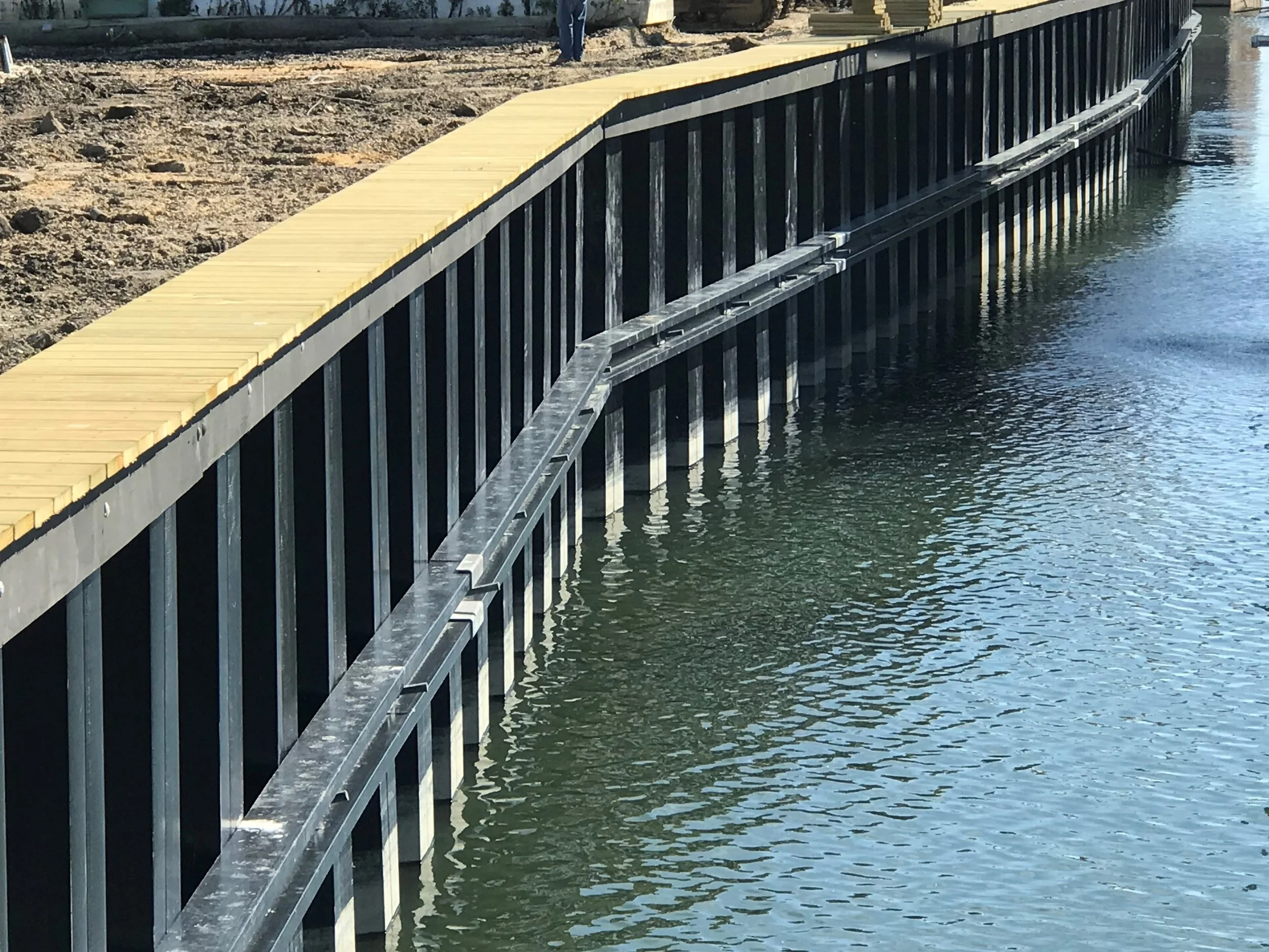
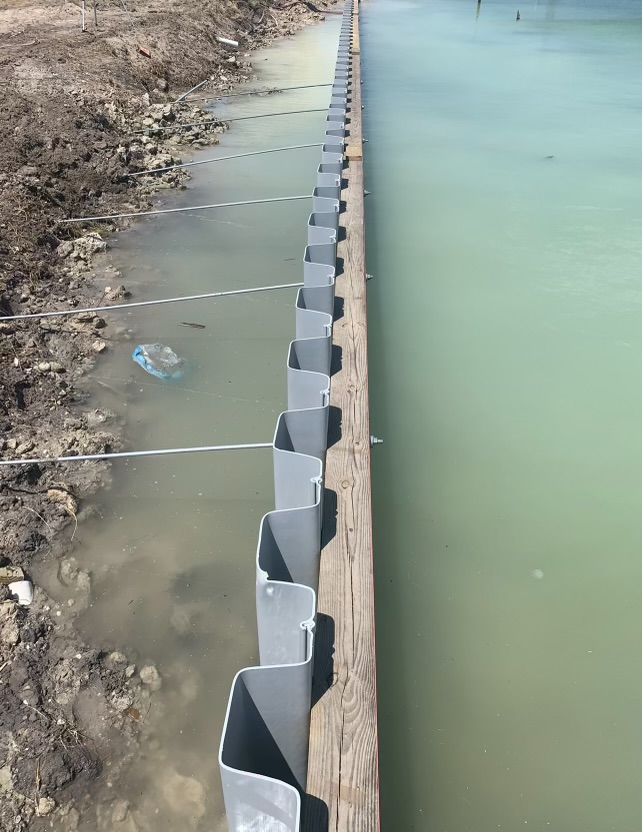
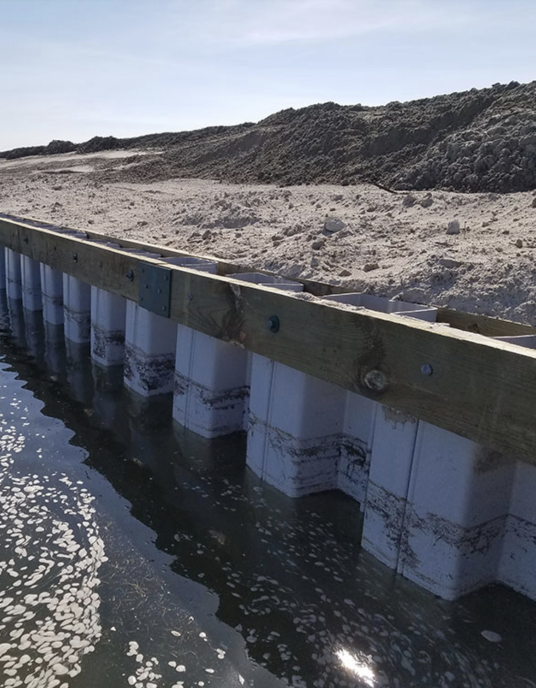
Sheet pile seawalls consist of interlocking vertical sheets driven deep into the soil.
Materials
✔ Steel (most common)
✔ Vinyl/PVC (lightweight, corrosion resistant)
✔ Aluminum (resistant to salt water)
Best For
✅ High wave energy areas
✅ Deep water shorelines
✅ Long, uniform banks
Pros
- Very strong & durable
- Works well with tidal and fluctuating water levels
- Lower maintenance than some options
Cons
- Can be more expensive upfront
- Requires heavy equipment
👉 Best choice for deep lakes, coastal exposures, and high erosion pressure.
🌱 2. Reinforced Concrete Seawalls
4
Overview
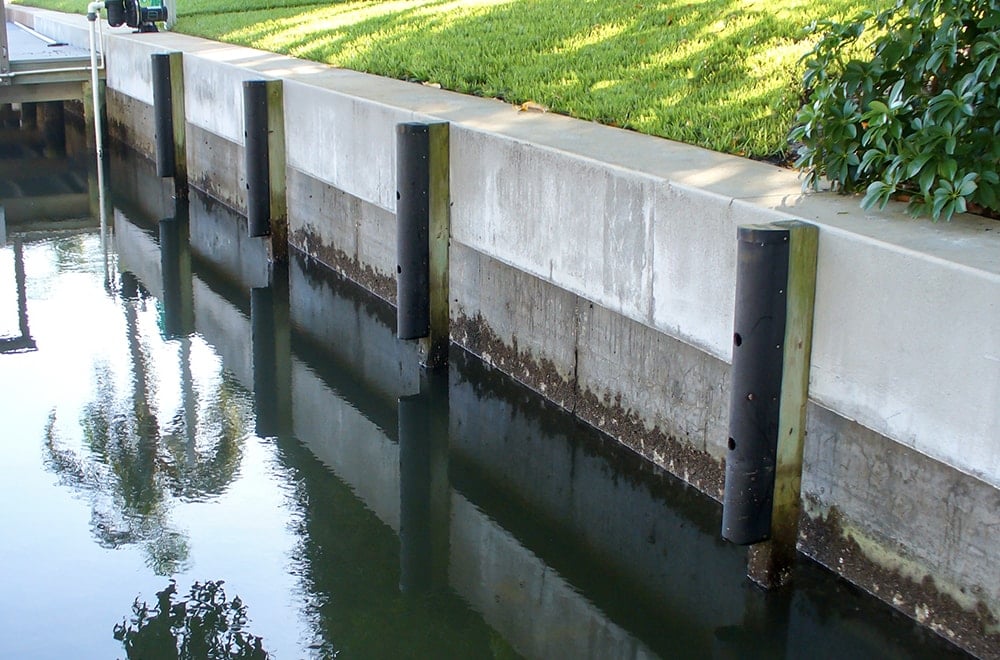
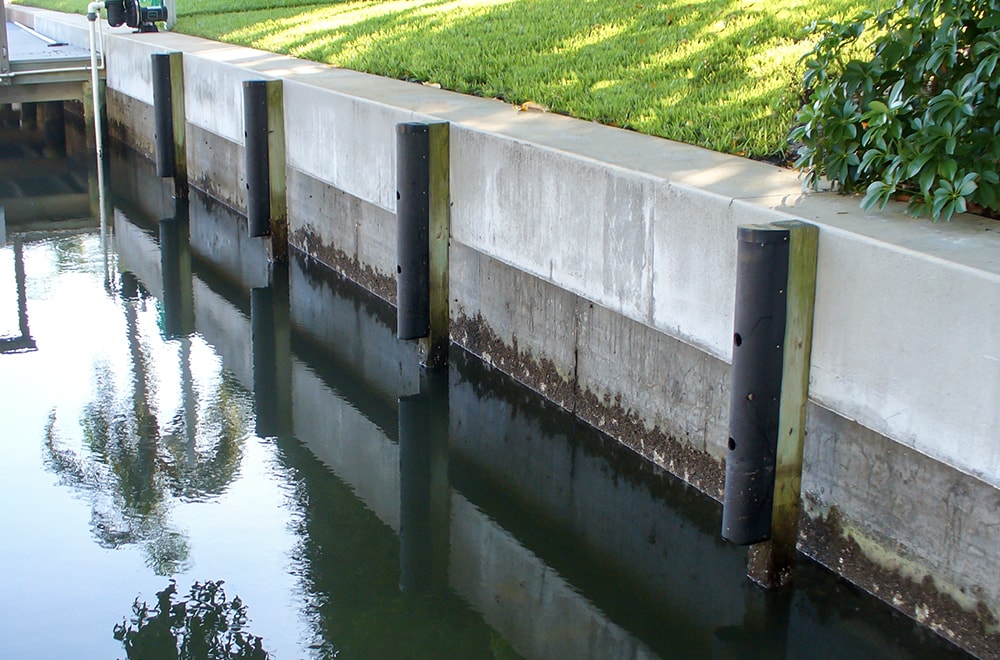
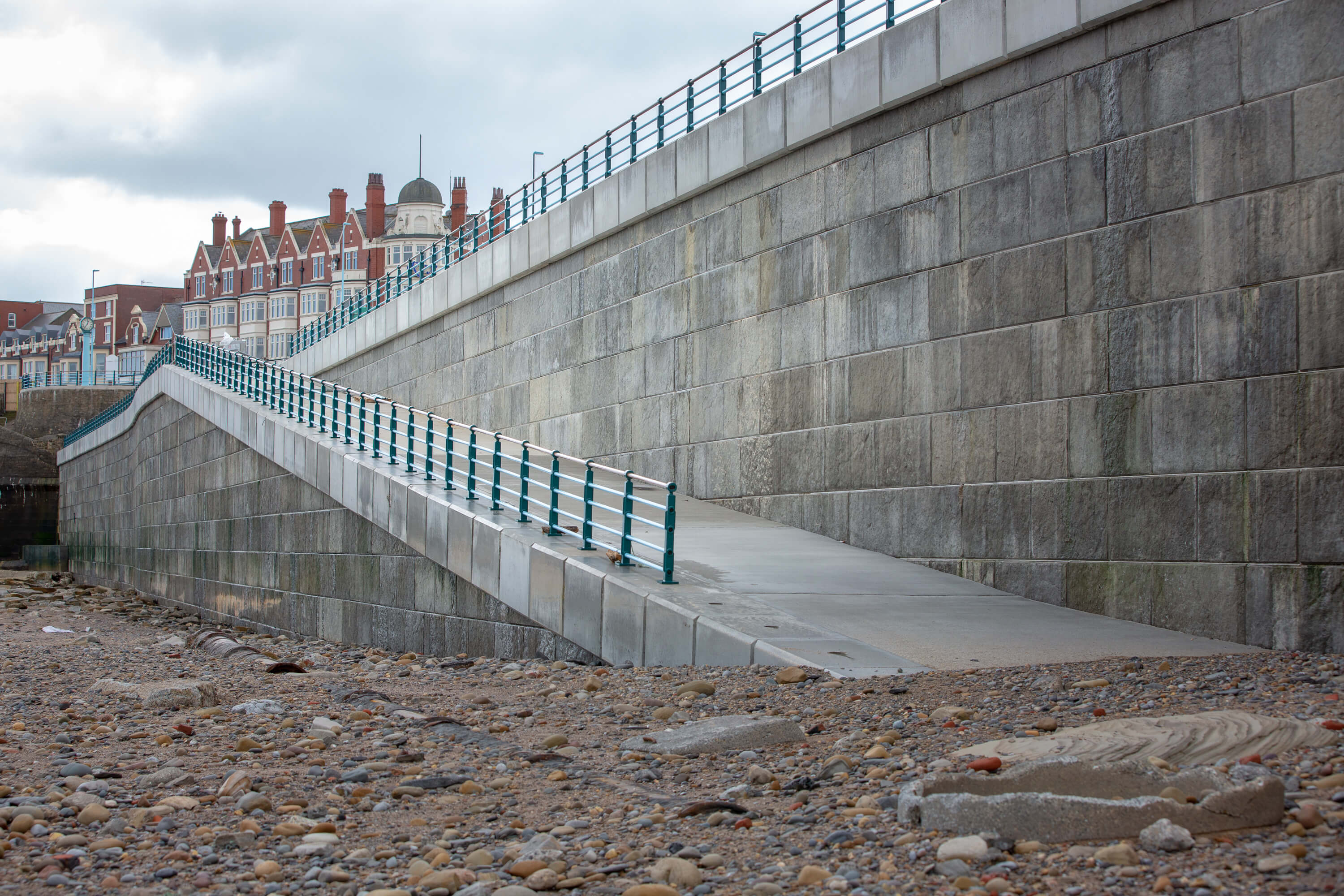
Solid concrete panels supported by pilings or bulkheads.
Best For
✅ Urban waterfronts
✅ Harsh environments
✅ Heavy wave impact
Pros
- Extremely durable
- Can be engineered to stand up to heavy impacts
- Solid barrier against erosion
Cons
- High material and installation cost
- Can reflect wave energy (increases scour below)
👉 Ideal when strength and permanence are top priority.
📏 3. Segmental Block (Gravity) Seawalls

4
Overview
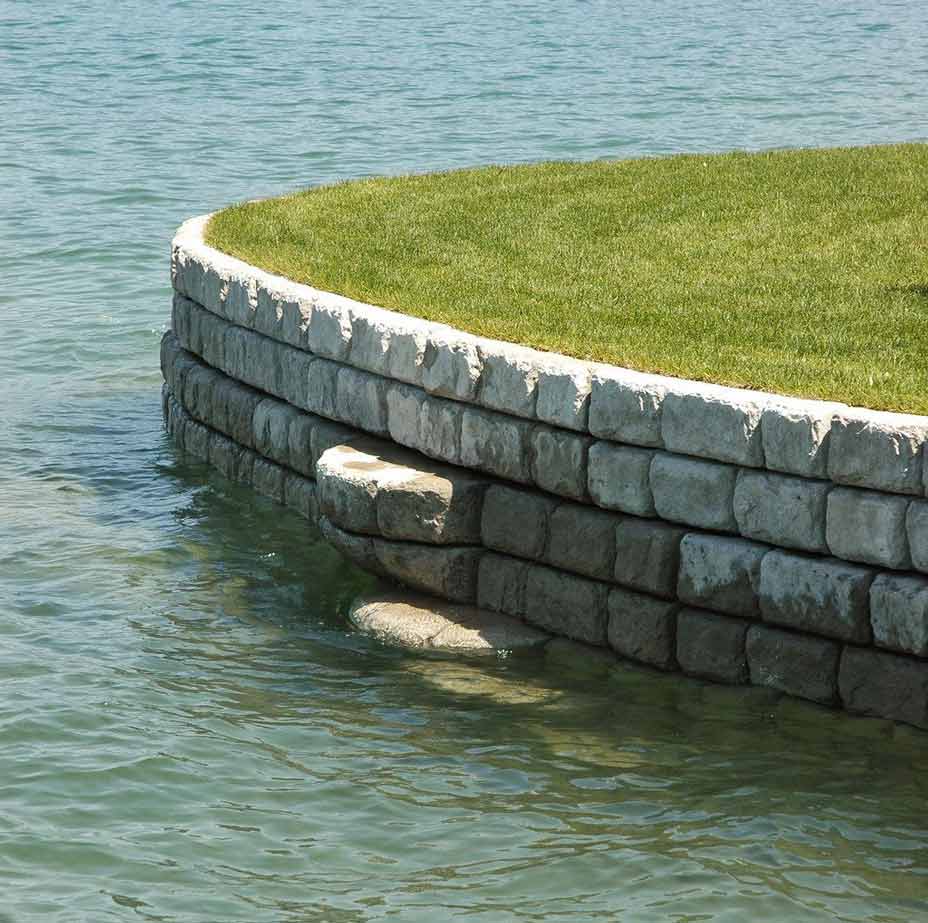
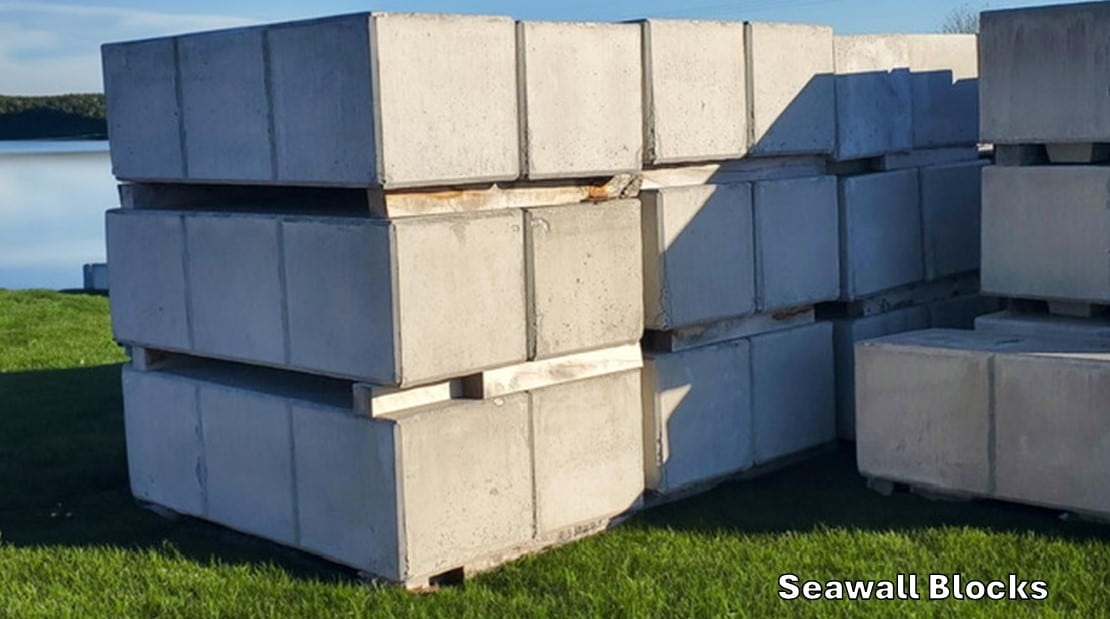
Large precast blocks stacked to create a massive, gravity-based shoreline wall.
Best For
✅ Moderate erosion
✅ Shallower shorelines
✅ Budget-aware projects
Pros
- Flexible design
- Visually appealing
- Easier and faster to install
Cons
- Not suited to very high wave energy
- Larger footprint on land and water
👉 Great for residential lakeshores or low-energy environments.
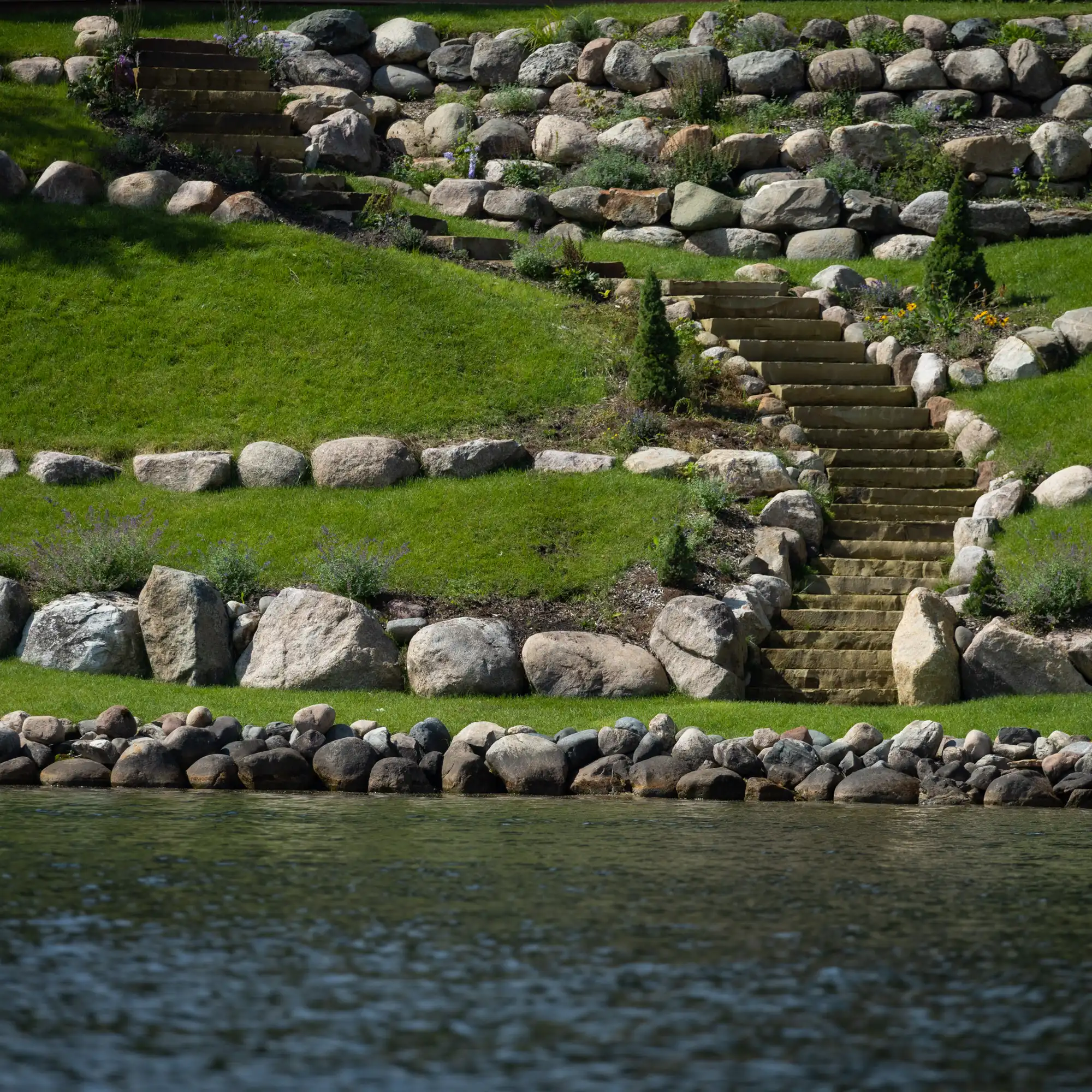
🌿 4. Living Shorelines (Bioengineered Solutions)


4
Overview
Not a traditional wall — this uses natural materials (plants, coir logs, native vegetation) combined with rock or riprap to stabilize shorelines.
Best For
✅ Environmentally sensitive areas
✅ Low to moderate wave energy
✅ Regulatory preference for natural solutions
Pros
- Enhances habitat & aesthetics
- Often faster permitting
- Reduces wave energy naturally
Cons
- Not suitable for high-energy wave environments
- May require more long-term maintenance
👉 Best when ecology and aesthetics matter alongside erosion control.
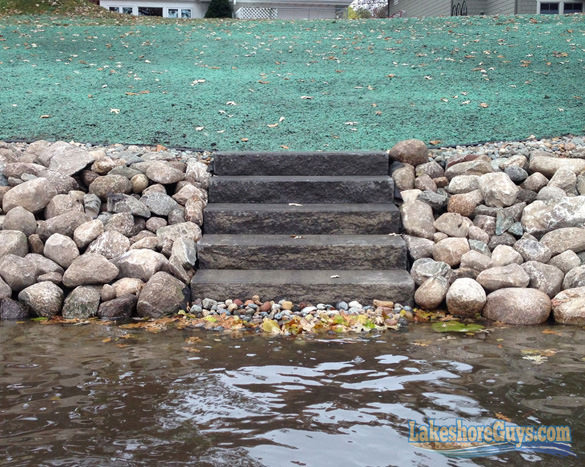
🪨 5. Riprap Armoring (Rock Seawall)


4
Overview
Layered rock placed along the shoreline to absorb and break wave energy.
Best For
✅ Variable water levels
✅ Eroding banks with gentle slopes
✅ Transitional zones with vegetation
Pros
- Cost-effective
- Flexible and adaptive
- Excellent wave energy dissipation
Cons
- Can shift if not engineered
- Aesthetics not suitable for every property
👉 Good choice where concrete or sheet pile isn’t practical.
📌 Choosing the “Best” Seawall: What Matters
Here’s what engineers evaluate:
1️⃣ Wave Energy & Exposure
- High waves → Sheet pile or concrete
- Low waves → Gravity block or living shoreline
2️⃣ Soil & Subsurface Conditions
- Soft soils → may need deeper pilings
- Hard soils → allow lighter installations
3️⃣ Water Depth at Shoreline
- Deeper water → sheet pile
- Shallow → gravity block or riprap
4️⃣ Environmental Constraints
- Sensitive habitat → living shoreline
- Regulatory limits → impacts material choice
5️⃣ **Budget
- $ → Living shoreline + vegetation
⚙️ Engineering & Permitting (Crucial!)
To maximize performance:
✔ Get site surveys & soil borings
✔ Work with a coastal/marine engineer
✔ Design for scour protection
✔ Include toe protection & drainage
✔ Check local, county & state permits
In Michigan, many shorelines are regulated by:
- Local zoning districts
- County drain commissions
- Michigan DEQ/EGLE (Great Lakes & Inland Lakes)
Permitting often dictates allowable materials and methods.
🪛 Installation Quality Matters
Even the best seawall fails if installed poorly.
Work with contractors experienced in:
- Marine construction
- Heavy equipment operation
- Shoreline stabilization
- Engineered design specs
Ask for:
✔ Engineering plans
✔ Warranty & maintenance plan
✔ References & past results
🧠 Final Recommendation (Quick Guide)
| Shoreline Condition | Best System |
|---|---|
| High wave action, deep water | Steel or Vinyl Sheet Pile |
| Urban, heavy impact | Reinforced Concrete |
| Moderate erosion, residential | Segmental Block |
| Ecologically sensitive | Living Shoreline |
| Gentle slope, variable water | Riprap |
📌 Summary
The best engineered seawall depends on your site conditions:
✔ Sheet pile — strongest all-around
✔ Concrete — permanent & durable
✔ Block — cost-friendly & flexible
✔ Living shorelines — ecology and aesthetics
✔ Riprap — simple wave energy dissipation
Each has its place — but none should be chosen without an engineered design and professional assessment.